Thursday, 8 June 2017

Cinchonine hơp chất kháng A549

Cinchonine induces apoptosis of HeLa and A549 cells through ...

Cinchonine hơp chất kháng A549

From Wikipedia, the free encyclopedia
Cinchonine
Cinchonine
Names
IUPAC name
(S)-[(2R,4S,5R)-5-ethenyl-1-azabicyclo[2.2.2]octan-2-yl]-quinolin-4-ylmethanol
Identifiers
3D model (JSmol)
ChemSpider
ECHA InfoCard100.003.850
KEGG
PubChem CID
UNII
Properties
C19H22N2O
Molar mass294.39 g/mol
Melting point260-263
Except where otherwise noted, data are given for materials in their standard state (at 25 °C [77 °F], 100 kPa).
Yes verify (what is Yes ?)
Infobox references
Cinchonine is an alkaloid found in Cinchona officinalis. It is used in asymmetric synthesis in organic chemistry. It is a stereoisomer and pseudo-enantiomer of cinchonidine.

Cyclophosphamide và glutathione thuốc kháng A549

Differential Toxicities of Cyclophosphamide and its Glutathione ...

Cyclophosphamide và glutathione thuốc kháng A549

Cyclophosphamide

From Wikipedia, the free encyclopedia
Cyclophosphamide
Cyclophosphamide.svg
R-cyclophosphamide-from-xtal-1996-3D-balls.png
Clinical data
Pronunciation/ˌsklˈfɒsfəˌmd-lə-/[1][2]
Trade namesLyophilized Cytoxan, Endoxan, Cytoxan, Neosar, Procytox, Revimmune, Cycloblastin
AHFS/Drugs.comMonograph
MedlinePlusa682080
Pregnancy
category
  • AU: D
  • US: D (Evidence of risk)
    Routes of
    administration
    by mouth, intravenous
    ATC code
    Legal status
    Legal status
    • In general: ℞ (Prescription only)
    Pharmacokinetic data
    Bioavailability>75% (by mouth)
    Protein binding>60%
    MetabolismLiver
    Biological half-life3–12 hours
    ExcretionKidney
    Identifiers
    CAS Number
    PubChem CID
    DrugBank
    ChemSpider
    UNII
    KEGG
    ChEBI
    ChEMBL
    ECHA InfoCard100.000.015
    Chemical and physical data
    FormulaC7H15Cl2N2O2P
    Molar mass261.086 g/mol
    3D model (Jmol)
    Melting point2 °C (36 °F)
      (verify)
    Cyclophosphamide (CP), also known as cytophosphane among other,[3] is a medication used as chemotherapy and to suppress the immune system.[4] As chemotherapy it is used to treat lymphomamultiple myelomaleukemiaovarian cancerbreast cancersmall cell lung cancerneuroblastoma, and sarcoma. As an immune suppressor it is used in nephrotic syndrome and following organ transplant. It is taken by mouth or injection into a vein.[4]
    Most people develop side effects. Common side effects include low white blood cell counts, loss of appetite, vomiting, hair loss, and bleeding from the bladder. Other severe side effects include an increased future risk of cancer, infertilityallergic reactions, and pulmonary fibrosis. Cyclophosphamide is in the alkylating agent and nitrogen mustard family of medications. It works by interfering with the duplication of DNA and the creation of RNA.[4]
    Cyclophosphamide was approved for medical use in the United States in 1959.[4] It is on the World Health Organization's List of Essential Medicines, the most effective and safe medicines needed in a health system.[5] The wholesale cost in the developing world is about 3.65 to 14.30 USD per 1 g vial.[6] In the United Kingdom this dose costs the NHS about 17.06 pounds.[7] In the United States this dose by mouth is about 19.56 USD.[8]

    Medical uses[edit]

    Cyclophosphamide is used to treat cancers and autoimmune diseases. It is used to quickly control the disease. Because of its toxicity, it is replaced as soon as possible by less toxic drugs. Regular and frequent laboratory evaluations are required to monitor kidney function, avoid drug-induced bladder complications and screen for bone marrow toxicity.
    It is used in medicine for treating certain cancers of the Islets of Langerhans and used in medical research to produce an animal model for Type 1 diabetes in a large dose as well as Type 2 diabetes with multiple low doses.

    Cancer[edit]


    Cyclophosphamide IV drip
    The main use of cyclophosphamide is with other chemotherapy agents in the treatment of lymphomas, some forms of brain cancerneuroblastomaleukemia,[9] and some solid tumors.[10] It is a chemotherapy drug that works by inducing the death of certain T cells.

    Autoimmune diseases[edit]

    Cyclophosphamide decreases the immune system's response, and although concerns about toxicity restrict its use to patients with severe disease, it remains an important treatment for life-threatening autoimmune diseases where disease-modifying antirheumatic drugs (DMARDs) have been ineffective. For example, systemic lupus erythematosus with severe lupus nephritis[11] may respond to pulsed cyclophosphamide. Cyclophosphamide is also used to treat minimal change disease,[12] severe rheumatoid arthritis,[13]granulomatosis with polyangiitis[14] and multiple sclerosis.[15]

    AL amyloidosis[edit]

    Cyclophosphamide, used in combination with thalidomide or lenalidomide and dexamethasone has documented efficacy as an off-label treatment of AL amyloidosis. It appears to be an alternative to the more traditional treatment with melphalan in people who are ill-suited for autologous stem cell transplant.[16]

    Contraindications[edit]

    Like other alkylating agents, cyclophosphamide is teratogenic and contraindicated in pregnant women (Pregnancy Category D) except for life-threatening circumstances in the mother.[17][18] Additional relative contraindications to the use of cyclophosphamide include lactation, active infection, neutropenia or bladder toxicity.
    Cyclophosphamide is a Pregnancy Category D drug and causes birth defects. First trimester exposure to cyclophosphamide for the treatment of cancer or lupus displays a pattern of anomalies labeled "cyclophosphamide embryopathy," including growth restriction, ear and facial abnormalities, absence of digits and hypoplastic limbs.[19][20] Women previously treated with alkylating agents are often able to conceive and deliver healthy children.[21][22]

    Side effects[edit]

    Adverse drug reactions from cyclophosphamide are related to the cumulative medication dose and include chemotherapy-induced nausea and vomiting,[23] bone marrow suppression,[24] stomach achehemorrhagic cystitisdiarrhea, darkening of the skin/nails, alopecia (hair loss) or thinning of hair, changes in color and texture of the hair and lethargy. Other side effects may include easy bruising/bleeding, joint pain, mouth sores, slow-healing existing wounds, unusual decrease in the amount of urine or unusual tiredness or weakness.[citation needed]
    Pulmonary injury appears rare,[25] but can present with two clinical patterns: an early, acute pneumonitis and a chronic, progressive fibrosis.[26] Cardiotoxicity is a major problem with people treated with higher dose regimens.[27]
    High-dose intravenous cyclophosphamide can cause the syndrome of inappropriate antidiuretic hormone secretion (SIADH) and a potentially fatal hyponatremia when compounded by intravenous fluids administered to prevent drug-induced cystitis.[28] While SIADH has been described primarily with higher doses of cyclophosphamide, it can also occur with the lower doses used in the management of inflammatory disorders.[29]

    Bladder bleeding[edit]

    Acrolein is toxic to the bladder epithelium and can lead to hemorrhagic cystitis, which is associated with microscopic or gross hematuria and occasionally dysuria.[30]Risks of hemorrhagic cystitis can be minimized with adequate fluid intake, avoidance of nighttime dosage and mesna (sodium 2-mercaptoethane sulfonate), a sulfhydryl donor which binds and detoxifies acrolein.[31][32] Intermittent dosing of cyclophosphamide decreases cumulative drug dose, reduces bladder exposure to acrolein and has equal efficacy to daily treatment in the management of lupus nephritis.[33]

    Infection[edit]

    Neutropenia or lymphoma arising secondary to cyclophosphamide usage can predispose people to a variety of bacterialfungal and opportunistic infections.[34] No published guidelines cover PCP prophylaxis for people with rheumatological diseases receiving immunosuppressive drugs, but some advocate its use when receiving high-dose medication.[35][36]

    Infertility[edit]

    Cyclophosphamide has been found to significantly increase the risk of premature menopause in females and of infertility in males and females, the likelihood of which increases with cumulative drug dose and increasing patient age. Such infertility is usually temporary, but can be permanent.[37] The use of leuprolide in women of reproductive age before administration of intermittently dosed cyclophosphamide may diminish the risks of premature menopause and infertility.[38]

    Cancer[edit]

    Cyclophosphamide is carcinogenic and may increase the risk of developing lymphomasleukemiaskin cancertransitional cell carcinoma of the bladder or other malignancies.[39] Myeloproliferative neoplasms, including acute leukemianon-Hodgkin lymphoma and multiple myeloma, occurred in 5 of 119 rheumatoid arthritis patients within the first decade after receiving cyclophosphamide, compared with one case of chronic lymphocytic leukemia in 119 rheumatoid arthritis patients with no history.[40] Secondary acute myeloid leukemia (therapy-related AML, or "t-AML") is thought to occur either by cyclophosphamide-inducing mutations or selecting for a high-risk myeloid clone.[41] This risk may be dependent on dose and other factors, including the condition, other agents or treatment modalities (including radiotherapy), treatment length and intensity. For some regimens, it is rare. For instance, CMF-therapy for breast cancer (where the cumulative dose is typically less than 20 grams of cyclophosphamide) carries an AML risk of less than 1/2000, with some studies finding no increased risk compared to background. Other treatment regimens involving higher doses may carry risks of 1–2% or higher. Cyclophosphamide-induced AML, when it happens, typically presents some years after treatment, with incidence peaking around 3–9 years. After nine years, the risk falls to background. When AML occurs, it is often preceded by a myelodysplastic syndrome phase, before developing into overt acute leukemia. Cyclophosphamide-induced leukemia will often involve complex cytogenetics, which carries a worse prognosis than de novo AML.[citation needed]

    Pharmacology[edit]

    Oral cyclophosphamide is rapidly absorbed and then converted by mixed-function oxidase enzymes (cytochrome P450 system) in the liver to active metabolites.[42][43]The main active metabolite is 4-hydroxycyclophosphamide, which exists in equilibrium with its tautomeraldophosphamide. Most of the aldophosphamide is then oxidised by the enzyme aldehyde dehydrogenase (ALDH) to make carboxycyclophosphamide. A small proportion of aldophosphamide freely diffuses into cells, where it is decomposed into two compounds, phosphoramide mustard and acrolein.[44] The active metabolites of cyclophosphamide are highly protein bound and distributed to all tissues, are assumed to cross the placenta and are known to be present in breast milk.[45]
    It is specifically in the oxazaphosphorine group of medications.[46]
    Cyclophosphamide metabolites are primarily excreted in the urine unchanged, and drug dosing should be appropriately adjusted in the setting of renal dysfunction.[47]Drugs altering hepatic microsomal enzyme activity (e.g., alcoholbarbituratesrifampicin, or phenytoin) may result in accelerated metabolism of cyclophosphamide into its active metabolites, increasing both pharmacologic and toxic effects of the drug; alternatively, drugs that inhibit hepatic microsomal enzymes (e.g. corticosteroidstricyclic antidepressants, or allopurinol) result in slower conversion of cyclophosphamide into its metabolites and consequently reduced therapeutic and toxic effects.[48]
    Cyclophosphamide reduces plasma pseudocholinesterase activity and may result in prolonged neuromuscular blockade when administered concurrently with succinylcholine.[49][50] Tricyclic antidepressants and other anticholinergic agents can result in delayed bladder emptying and prolonged bladder exposure to acrolein.[citation needed]

    Mechanism of action[edit]

    The main effect of cyclophosphamide is due to its metabolite phosphoramide mustard. This metabolite is only formed in cells that have low levels of ALDH. Phosphoramide mustard forms DNA crosslinks both between and within DNA strands at guanine N-7 positions (known as interstrand and intrastrand crosslinkages, respectively). This is irreversible and leads to cell apoptosis.[51]
    Cyclophosphamide has relatively little typical chemotherapy toxicity as ALDHs are present in relatively large concentrations in bone marrow stem cellsliver and intestinal epithelium. ALDHs protect these actively proliferating tissues against toxic effects of phosphoramide mustard and acrolein by converting aldophosphamide to carboxycyclophosphamide that does not give rise to the toxic metabolites phosphoramide mustard and acrolein. This is because carboxycyclophosphamide cannot undergo β-elimination (the carboxylate acts as an electron-donating group, forbidding the transformation), preventing nitrogen mustard activation and subsequent alkylation.[30][52][53]
    Cyclophosphamide induces beneficial immunomodulatory effects in adaptive immunotherapy. Suggested mechanisms include:[54]
    1. Elimination of T regulatory cells (CD4+CD25+ T cells) in naive and tumor-bearing hosts
    2. Induction of T cell growth factors, such as type I IFNs, and/or
    3. Enhanced grafting of adoptively transferred, tumor-reactive effector T cells by the creation of an immunologic space niche.
    Thus, cyclophosphamide preconditioning of recipient hosts (for donor T cells) has been used to enhance immunity in naïve hosts, and to enhance adoptive T cell immunotherapy regimens, as well as active vaccination strategies, inducing objective antitumor immunity.

    History[edit]

    As reported by O. M. Colvin in his study of the development of cyclophosphamide and its clinical applications,
    Phosphoramide mustard, one of the principal toxic metabolites of cyclophosphamide, was synthesized and reported by Friedman and Seligman in 1954[55]…It was postulated that the presence of the phosphate bond to the nitrogen atom could inactivate the nitrogen mustard moiety, but the phosphate bond would be cleaved in gastric cancers and other tumors which had a high phosphamidase content. However, in studies carried out after the clinical efficacy of cyclophosphamide was demonstrated, phosphoramide mustard proved to be cytotoxic in vitro (footnote omitted), but to have a low therapeutic index in vivo.[56]
    Cyclophosphamide and the related nitrogen mustard–derived alkylating agent ifosfamide were developed by Norbert Brock and ASTA (now Baxter Oncology). Brock and his team synthesised and screened more than 1,000 candidate oxazaphosphorine compounds.[57] They converted the base nitrogen mustard into a nontoxic "transport form". This transport form was a prodrug, subsequently actively transported into cancer cells. Once in the cells, the prodrug was enzymatically converted into the active, toxic form. The first clinical trials were published at the end of the 1950s.[58][59][60] In 1959 it became the eighth cytotoxic anticancer agent to be approved by the FDA.[30]

    Society and culture[edit]

    The abbreviation CP is common, although abbreviating drug names is not best practice in medicine.[61]

    Research[edit]

    Because of its impact on the immune system, it is used in animal studies. Rodents are injected intraperitoneally with either a single dose of 150 mg/kg or two doses (150 and 100 mg/kg) spread over two days.[62] This can be used for applications such as:
    • The EPA may be concerned about potential human pathogenicity of an engineered microbe when conducting an MCAN review. Particularly for bacteria with potential consumer exposure they require testing of the microbe on immuno-compromised rats [63]
    • Cyclophosphamide provides a positive control when studying immune-response of a new drug.[64]


    Glutathione

    From Wikipedia, the free encyclopedia
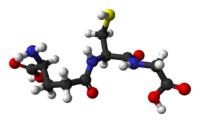
    Glutathione[1]
    Glutathione.png
    Glutathione-from-xtal-3D-balls.png
    Names
    IUPAC name
    (2S)-2-Amino-4-{[(1R)-1-[(carboxymethyl)carbamoyl]-2-sulfanylethyl]carbamoyl}butanoic acid
    Other names
    γ-L-Glutamyl-L-cysteinylglycine
    (2S)-2-Amino-5-[[(2R)-1-(carboxymethylamino)-1-oxo-3-sulfanylpropan-2-yl]amino]-5-oxopentanoic acid
    Identifiers
    3D model (JSmol)
    AbbreviationsGSH
    ChEBI
    ChemSpider
    DrugBank
    ECHA InfoCard100.000.660
    KEGG
    MeSHGlutathione
    PubChem CID
    UNII
    Properties
    C10H17N3O6S
    Molar mass307.32 g·mol−1
    Melting point195 °C (383 °F; 468 K)
    Freely soluble[1]
    Solubility in methanoldiethyl etherInsoluble
    Pharmacology
    V03AB32 (WHO)
    Except where otherwise noted, data are given for materials in their standard state (at 25 °C [77 °F], 100 kPa).
    Yes verify (what is Yes ?)
    Infobox references
    Glutathione (GSH) is an important antioxidant in plants, animals, fungi, and some bacteria and archaea. Glutathione is capable of preventing damage to important cellular components caused by reactive oxygen species such as free radicalsperoxideslipid peroxides, and heavy metals.[2] It is a tripeptide with a gamma peptide linkage between the carboxyl group of the glutamate side chain and the amine group of cysteine, and the carboxyl group of cysteine is attached by normal peptide linkage to a glycine.
    Thiol groups are reducing agents, existing at a concentration around 5 mM in animal cells. Glutathione reduces disulfide bonds formed within cytoplasmic proteins to cysteines by serving as an electron donor. In the process, glutathione is converted to its oxidized form, glutathione disulfide (GSSG), also called L-(–)-glutathione.
    Once oxidized, glutathione can be reduced back by glutathione reductase, using NADPH as an electron donor.[3] The ratio of reduced glutathione to oxidized glutathione within cells is often used as a measure of cellular oxidative stress.[4][5]

    Biosynthesis[edit]

    The biosynthesis pathway for glutathione is found in some bacteria, such as cyanobacteria and proteobacteria, but is missing in many other bacteria. Most eukaryotes, including humans, synthesize glutathione, but some do not, such as LeguminosaeEntamoeba, and Giardia. The only archaea that make glutathione are halobacteria.[6][7]
    Glutathione is not an essential nutrient for humans, since it can be synthesized in the body from the amino acids L-cysteineL-glutamic acid, and glycine; it does not have to be present as a supplement in the diet. The sulfhydryl group (SH) of cysteine serves as a proton donor and is responsible for its biological activity. Cysteine is the rate-limiting factor in cellular glutathione biosynthesis, since this amino acid is relatively rare in foods.
    Cells make glutathione in two adenosine triphosphate-dependent steps:
    • First, gamma-glutamylcysteine is synthesized from L-glutamate and cysteine via the enzyme gamma-glutamylcysteine synthetase (glutamate cysteine ligase, GCL). This reaction is the rate-limiting step in glutathione synthesis.[8]
    • Second, glycine is added to the C-terminal of gamma-glutamylcysteine via the enzyme glutathione synthetase.
    Animal glutamate cysteine ligase (GCL) is a heterodimeric enzyme composed of a catalytic and a modulatory subunit. The catalytic subunit is necessary and sufficient for all GCL enzymatic activity, whereas the modulatory subunit increases the catalytic efficiency of the enzyme. Mice lacking the catalytic subunit (i.e., lacking all de novo GSH synthesis) die before birth.[9] Mice lacking the modulatory subunit demonstrate no obvious phenotype, but exhibit marked decrease in GSH and increased sensitivity to toxic insults.[10][11][12]
    While all animal cells are capable of synthesizing glutathione, glutathione synthesis in the liver has been shown to be essential. GCLC knockout mice die within a month of birth due to the absence of hepatic GSH synthesis.[13][14] Major transport into the blood stream is driven by an electrochemical gradient, specifically through the transport proteins RcGshT and RsGshT.[15] Similarly, glutathione S-conjugates, synthesized hepatically, feature preferential secretion into bile.[14][16]
    The plant glutamate cysteine ligase (GCL) is a redox-sensitive homodimeric enzyme, conserved in the plant kingdom.[17] In an oxidizing environment, intermolecular disulfide bridges are formed and the enzyme switches to the dimeric active state. The midpoint potential of the critical cysteine pair is -318 mV. In addition to the redox-dependent control, the plant GCL enzyme is feedback inhibited by glutathione.[18] GCL is exclusively located in plastids, and glutathione synthetase (GS) is dual-targeted to plastids and cytosol, thus GSH and gamma-glutamylcysteine are exported from the plastids.[19] Both glutathione biosynthesis enzymes are essential in plants; knock-outs of GCL and GS are lethal to embryo and seedling.[20]

    Function[edit]

    Glutathione exists in both reduced (GSH) and oxidized (GSSG) states. In the reduced state, the thiol group of cysteine is able to donate a reducing equivalent (H++ e) to other molecules, such as reactive oxygen species to neutralize them, or to protein cysteines to maintain their reduced forms. With donating an electron, glutathione itself becomes reactive and readily reacts with another reactive glutathione to form glutathione disulfide (GSSG). Such a reaction is probable due to the relatively high concentration of glutathione in cells (up to 7 mM in the liver).[21]
    Generally, interactions between GSH and other molecules with higher relative electrophilicity deplete GSH levels within the cell. An exception to this case involves the sensitivity of GSH to the electrophilic compound's relative concentration. In high concentrations, the organic molecule Diethyl maleate fully depleted GSH levels in cells. However, in low concentrations, a minor decrease in cellular GSH levels was followed by a two-fold increase.[22][23]
    GSH can be regenerated from GSSG by the enzyme glutathione reductase (GSR):[3] NADPH reduces FAD present in GSR to produce a transient FADH-anion. This anion then quickly breaks a disulfide bond (Cys58 - Cys63) and leads to Cys63's nucleophilically attacking the nearest sulfide unit in the GSSG molecule (promoted by His467), which creates a mixed disulfide bond (GS-Cys58) and a GS-anion. His467 of GSR then protonates the GS-anion to form the first GSH. Next, Cys63 nucleophilically attacks the sulfide of Cys58, releasing a GS-anion, which, in turn, picks up a solvent proton and is released from the enzyme, thereby creating the second GSH. So, for every GSSG and NADPH, two reduced GSH molecules are gained, which can again act as antioxidants scavenging reactive oxygen species in the cell.
    In healthy cells and tissue, more than 90% of the total glutathione pool is in the reduced form (GSH) and less than 10% exists in the disulfide form (GSSG). An increased GSSG-to-GSH ratio is considered indicative of oxidative stress.[24]
    Glutathione has multiple functions:
    • It maintains levels of reduced glutaredoxin and glutathione peroxidase[25]
    • It is one of the major endogenous antioxidants produced by the cells, participating directly in the neutralization of free radicals and reactive oxygen compounds, as well as maintaining exogenous antioxidants such as vitamins C and E in their reduced (active) forms.[26][27][28]
    • Regulation of the nitric oxide cycle is critical for life, but can be problematic if unregulated.[29]
    • It is used in metabolic and biochemical reactions such as DNA synthesis and repair, protein synthesis, prostaglandin synthesis, amino acid transport, and enzyme activation. Thus, every system in the body can be affected by the state of the glutathione system, especially the immune system, the nervous system, the gastrointestinal system, and the lungs.[citation needed]
    • It has a vital function in iron metabolism. Yeast cells depleted of GSH or containing toxic levels of GSH show an intense iron starvation-like response and impairment of the activity of extramitochondrial ISC enzymes thus inhibiting oxidative endoplasmic reticulum folding, followed by death.[30]
    • It has roles in progression of the cell cycle, including cell death.[5] GSH levels regulate redox changes to nuclear proteins necessary for the initiation of cell differentiation. Differences in GSH levels also determine the expressed mode of cell death, being either apoptosis or cell necrosis. Manageably low levels result in the systematic breakage of the cell whereas excessively low levels result in rapid cell death.[31]

    Function in animals[edit]

    GSH is known as a substrate in conjugation reactions, which is catalyzed by glutathione S-transferase enzymes in cytosolmicrosomes, and mitochondria. However, GSH is also capable of participating in nonenzymatic conjugation with some chemicals.
    In the case of N-acetyl-p-benzoquinone imine (NAPQI), the reactive cytochrome P450-reactive metabolite formed by paracetamol (acetaminophen), which becomes toxic when GSH is depleted by an overdose of acetaminophen, glutathione is an essential antidote to overdose. Glutathione conjugates to NAPQI and helps to detoxify it. In this capacity, it protects cellular protein thiol groups, which would otherwise become covalently modified; when all GSH has been spent, NAPQI begins to react with the cellular proteins, killing the cells in the process. The preferred treatment for an overdose of this painkiller is the administration (usually in atomized form) of N-acetyl-L-cysteine (often as a preparation called Mucomyst[32]), which is processed by cells to L-cysteine and used in the de novo synthesis of GSH.
    Glutathione (GSH) participates in leukotriene synthesis and is a cofactor for the enzyme glutathione peroxidase. It is also important as a hydrophilic molecule that is added to lipophilic toxins and waste in the liver during biotransformation before they can become part of the bile. Glutathione is also needed for the detoxification of methylglyoxal, a toxin produced as a byproduct of metabolism.
    This detoxification reaction is carried out by the glyoxalase systemGlyoxalase I (EC 4.4.1.5) catalyzes the conversion of methylglyoxal and reduced glutathione to S-D-lactoyl-glutathione. Glyoxalase II (EC 3.1.2.6) catalyzes the hydrolysis of S-D-lactoyl-glutathione to glutathione and D-lactic acid.
    Glutathione, along with oxidized glutathione (GSSG) and S-nitrosoglutathione (GSNO), have been found to bind to the glutamate recognition site of the NMDA and AMPA receptors (via their γ-glutamyl moieties), and may be endogenous neuromodulators.[33][34][35] At millimolar concentrations, they may also modulate the redox state of the NMDA receptor complex.[34] Glutathione has been found to bind to and activate ionotropic receptors that are different from any other excitatory amino acid receptor, and which may constitute glutathione receptors, potentially making it a neurotransmitter.[36] Glutathione is also able to activate the purinergic P2X7 receptor from Müller glia, inducing acute calcium transient signals and GABA release from both retinal neurons and glial cells.[37][38]

    Function in plants[edit]

    In plants, glutathione is crucial for biotic and abiotic stress management. It is a pivotal component of the glutathione-ascorbate cycle, a system that reduces poisonous hydrogen peroxide.[39] It is the precursor of phytochelatins, glutathione oligomers that chelate heavy metals such as cadmium.[40] Glutathione is required for efficient defence against plant pathogens such as Pseudomonas syringae and Phytophthora brassicae.[41] Adenylyl-sulfate reductase, an enzyme of the sulfur assimilation pathway, uses glutathione as an electron donor. Other enzymes using glutathione as a substrate are glutaredoxins. These small oxidoreductases are involved in flower development, salicylic acid, and plant defence signalling.[42]

    Supplementation[edit]

    Calcitriol (1,25-dihydroxyvitamin D3), the active metabolite of vitamin D3, after being synthesized from calcifediol in the kidney, increases glutathione levels in the brain and appears to be a catalyst for glutathione production.[43] It takes about ten days for the body to process vitamin D3 into calcitriol.[44]
    S-adenosylmethionine (SAMe), a cosubstrate involved in methyl group transfer, has also been shown to increase cellular glutathione content in persons suffering from a disease-related glutathione deficiency.[45][46][47]
    Low glutathione is commonly observed in wasting and negative nitrogen balance, as seen in cancer, HIV/AIDS, sepsis, trauma, burns, and athletic overtraining. Low levels are also observed in periods of starvation. These effects are hypothesized to be influenced by the higher glycolytic activity associated with cachexia, which result from reduced levels of oxidative phosphorylation.[48][49]

    Bioavailability[edit]

    Systemic bioavailability of orally consumed glutathione is poor because the molecule, a tripeptide, is the substrate of proteases (peptidases) of the alimentary canal, and due to the absence of a specific carrier of glutathione at the level of cell membrane.[50][51]

    Methods to determine glutathione[edit]

    Small molecule based glutathione probes[edit]

    Ellman's reagent and Monobromobimane[edit]

    Reduced glutathione may be visualized using Ellman's reagent or bimane derivatives such as monobromobimane. The monobromobimane method is more sensitive. In this procedure, cells are lysed and thiols extracted using a HCl buffer. The thiols are then reduced with dithiothreitol and labelled by monobromobimane. Monobromobimane becomes fluorescent after binding to GSH. The thiols are then separated by HPLC and the fluorescence quantified with a fluorescence detector.

    Monochlorobimane[edit]

    Monochlorobimane can be used to quantify glutathione in vivo. The quantification is done by confocal laser scanning microscopy after application of the dye to living cells.[52] This quantification process relies on measuring the rates of fluorescence changes and is limited to plant cells.

    5-Chloromethylfluorescein diacetate (CMFDA)[edit]

    CMFDA was initially used as a cell tracker. Unfortunately, it has also been mistakenly used as a glutathione probe. Unlike monochlorobimane, whose fluorescence increases upon reacting with glutathione, the fluorescence increase of CMFDA is due to the hydrolysis of the acetate groups inside cells. Although CMFDA may react with glutathione in cells, the fluorescence increase does not reflect the reaction. Therefore, studies using CMFDA as a glutathione probe should be revisited and re-interpreted.[53][54]

    ThiolQuant Green[edit]

    The major limitation of these bimane based probes and many other reported probes is that these probes are based on irreversible chemical reactions with glutathione, which renders these probes incapable of monitoring the real-time glutathione dynamics. Recently, the first reversible reaction based fluorescent probe-ThiolQuant Green (TQG)-for glutathione was reported.[55] ThiolQuant Green can not only perform high resolution measurements of glutathione levels in single cells using a confocal microscope, but also be applied in flow cytometry to perform bulk measurements.

    Protein based glutathione probes[edit]

    Another approach, which allows measurement of the glutathione redox potential at a high spatial and temporal resolution in living cells is based on redox imaging using the redox-sensitive green fluorescent protein (roGFP)[56] or redox sensitive yellow fluorescent protein (rxYFP)[57] GSSG because its very low physiological concentration is difficult to measure accurately unless the procedure is carefully executed and monitored and the occurrence of interfering compounds is properly addressed. GSSG concentration ranges from 10 to 50 μM in all solid tissues, and from 2 to 5 μM in blood (13–33 nmol per gram Hb). GSH-to-GSSG ratio ranges from 100 to 700.[58]

    Other biological implications[edit]

    Lead[edit]

    The sulphur-rich aspect of glutathione results in it forming relatively strong complexes with lead(II).[59]

    Cancer[edit]

    Once a tumor has been established, elevated levels of glutathione may act to protect cancerous cells by conferring resistance to chemotherapeutic drugs.[60] The antineoplastic mustard drug canfosfamide was modelled on the structure of glutathione.

    Cystic fibrosis[edit]

    Several studies have been completed on the effectiveness of introducing inhaled glutathione to people with cystic fibrosis with mixed results.[61][62]

    Alzheimer's disease (AD)[edit]

    Whilst extracellular amyloid beta (Aβ) plaques, neurofibrillary tangles (NFT), inflammation in the form of reactive astrocytes and microglia, and neuronal loss are all consistent pathological features of AD, a mechanistic link between these factors is yet to be clarified. Although the majority of past research has focused on fibrillar Aβ, soluble oligomeric Aβ species are now considered to be of major pathological importance in AD. Up-regulation of GSH may be protective against the oxidative and neurotoxic effects of oligomeric Aβ.

    Uses[edit]

    Winemaking[edit]

    The content of glutathione in must, the first raw form of wine, determines the browning, or caramelizing effect, during the production of white wine by trapping the caffeoyltartaric acid quinones generated by enzymic oxidation as grape reaction product.[63] Its concentration in wine can be determined by UPLC-MRM mass spectrometry.[64]

    Cosmetics[edit]

    Glutathione plays an important role in preventing oxidative damage to the skin.[65] In addition to its many recognized biological functions, glutathione has also been associated with skin lightening ability.[66] The role of glutathione as a skin whitener was discovered as a side effect of large doses of glutathione.[67] Glutathione utilizes different mechanisms to exert its action as a skin whitening agent at various levels of melanogenesis. It inhibits melanin synthesis by means of stopping the neurotransmitter precursor L-DOPA’s ability to interact with tyrosinase in the process of melanin production.[68] Glutathione inhibits the actual production as well as agglutination of melanin by interrupting the function of L-DOPA. Another study found that glutathione inhibits melanin formation by direct inactivation of the enzyme tyrosinase by binding and chelating copper within the enzyme’s active site.[69] Glutathione’s antioxidant property allows it to inhibit melanin synthesis by quenching of free radicals and peroxides that contribute to tyrosinase activation and melanin formation.[70] Its antioxidant property also protects the skin from UV radiation and other environmental as well as internal stressors that generate free radicals that cause skin damage and hyperpigmentation.[71] In most mammals, melanin formation consists of eumelanin (brown-black pigment) and pheomelanin ( yellow-red pigment) as either mixtures or co-polymers.[72] Increase in glutathione level may induce the pigment cell to produce pheomelanin instead of eumelanin pigments.[73] A research by Te-Sheng Chang found lowest levels of reduced glutathione to be associated with eumelanin type pigmentation, whereas the highest ones were associated with the pheomelanin.[66] As a result, it is reasonable to assume that depletion of glutathione would result in eumelanin formation. Prota [74] observed that decreased glutathione concentration led to the conversion of L-Dopaquinone to Dopachrome, increasing the formation of brown-black pigment (eumelanin).

    Importance of gamma-glutamylcysteine as a precursor for glutathione synthesis[edit]

    Gamma-glutamylcysteine (GGC) is the immediate precursor to GSH. GGC supplementation would circumvent feedback inhibitory control of GCL by the end product GSH. Accordingly, a method of elevating GSH levels with the notable advantage of bypassing negative feedback inhibition has been described. Because of this, GGC has been the focus of therapeutic efforts since Puri and Meister 1983. The first documented use of GGC in brains appears to be Pileblad and Magnusson, 1992. Astroglia cells are capable of utilising GGC.[75] Direct delivery of the GSH precursor GCC to brain has been reported to effectively replenish levels of GSH in the brain.[76]
    Most of the work done on GGC has been preclinical, based on in vivo animal models, or in vitro brain cultures. In order for the therapeutic value of GGC elevation against AD to be vindicated, three empirical hurdles have to be cleared. The first is to demonstrate that delivery of GCC into the brain can indeed increase GSH.[76] The second is to demonstrate that the increase in GGC can indeed reduce oxidative stress in the brain,[77] a condition frequently linked with cognitive decline.