Sonneratia caseolaris dược liệu kháng, SMMC7721, NCI–H460, MCF-7, Hela
From Wikipedia, the free encyclopedia
| Sonneratia caseolaris | |
|---|---|
 | |
| Unripened mangrove apple | |
 | |
| Bud of mangrove apple | |
| Scientific classification | |
| Kingdom: | Plantae |
| (unranked): | Angiosperms |
| (unranked): | Eudicots |
| (unranked): | Rosids |
| Order: | Myrtales |
| Family: | Lythraceae |
| Genus: | Sonneratia |
| Species: | S. caseolaris |
| Binomial name | |
| Sonneratia caseolaris (L.) Engl. | |
| Synonyms[1] | |
| |
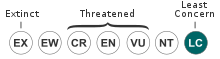
Sonneratia caseolaris, also known as mangrove apple or crabapple mangrove, kirala (කිරල) in Sri Lanka, "'Kulhlhavah"' "ކުއްޅަވައް " in dhivehi, Maldives (Thai: ลำพู), is a species of plant in the Lythraceae family. The fruit is noted for its outward similarity to the persimmon fruit.[2]
This tree is a type of mangrove growing up to 20 m in height and with a trunk reaching a maximum diameter of 50 cm. It is present in tropical tidal mud flats from Africa to Indonesia, southwards down to Northeast Australia and New Caledonia and northwards up to Hainan Island in China and the Philippines.
The fruit of this tree is the subject of a legend of Maldivian folklore, Kulhlhavah Falhu Rani.[3]
The tree is associated with congregating fireflies throughout southeast Asia[4] and is the food source of moth and other insects.
Uses[edit]
The leaves and the fruit are edible and appreciated as food in certain areas, such as Maldives.[5] In Sri Lanka, where the fruit is known as kirala gédi (කිරල ගෙඩි) in Sinhala, the pulp of the fruit is mixed with coconut milk extract and made into a milk shake.[6] Many tourist resorts situated in the South of Sri Lanka where the trees grow abundantly alongside rivers, offer fresh fruit drinks made from the fruit. In the Maldives the fruits are used as a refreshing drink and also eaten with scraped coconut & sugar.
The tree is also sometimes known as cork tree, because fishermen in some areas make fishing net floats by shaping the pneumatophores into small floats.[7]
References[edit]
- ^ http://www.theplantlist.org/tpl/record/tro-29700010
- ^ [1]
- ^ Romero-Frias, Xavier (2012) Folk tales of the Maldives, NIAS Press, ISBN 978-87-7694-104-8, ISBN 978-87-7694-105-5
- ^ [2]
- ^ Mangrove Apple
- ^ Apé Lamā Lōkaya:1950, Chapter 28 (Vijitha Yapa Publications) ISBN 978-955-665-250-5
- ^ Wild Singapore - Berembang Sonneratia caseolaris
External links[edit]
 Media related to Sonneratia caseolaris at Wikimedia Commons
- Mangrove flora: berembang (Sonneratia caseolaris)
- Flowers of India - Apple Mangrove
- Sonneratia caseolaris

 | This Myrtales article is a stub. You can help Wikipedia by expanding it. |


.jpg?uselang=fr)


.jpg)

