Shikonin Suppresses the Migratory Ability of Hepatocellular ...
Alkannin kháng HCC
From Wikipedia, the free encyclopedia
(Redirected from Shikonin)
 | |
 | |
| Names | |
|---|---|
| IUPAC name
5,8-Dihydroxy-2-[(1S)-1-hydroxy-4-methylpent-3-en-1-yl]naphthalene-1,4-dione
| |
| Other names
C.I. Natural red 20
Alkanet extract Anchusaic acid Anchusin | |
| Identifiers | |
3D model (JSmol)
| |
| ChemSpider | |
| ECHA InfoCard | 100.007.497 |
| E number | E103 (colours) |
| KEGG | |
PubChem CID
| |
| Properties[1] | |
| C16H16O5 | |
| Molar mass | 288.30 g·mol−1 |
| Appearance | Red-brown crystalline prisms |
| Density | 1.15 g/mL |
| Melting point | 149 °C (300 °F; 422 K) |
| Boiling point | 567 °C (1,053 °F; 840 K) |
| Sparingly soluble | |
| Hazards | |
| Lethal dose or concentration (LD, LC): | |
LD50 (median dose)
| 3.0 g/kg (mice) |
Except where otherwise noted, data are given for materials in their standard state (at 25 °C [77 °F], 100 kPa).
| |
 verify (what is verify (what is   ?) ?) | |
| Infobox references | |
Alkannin is a natural dye that is obtained from the extracts of plants from the borage family Alkanna tinctoria that are found in the south of France. The dye is used as a food coloring and in cosmetics. It is used as a red-brown food additivein regions such as Australia,[2] and is designated in Europe as the E number E103, but is no longer approved for use.[3]Alkannin has a deep red color in a greasy or oily environment and a violet color in an alkaline environment.[citation needed]
The chemical structure as a naphthoquinone derivative was first determined by Brockmann in 1936.[4] The enantiomer of alkannin is known as shikonin, and the racemic mixture of the two is known as shikalkin.[5][6]
The enzyme 4-hydroxybenzoate geranyltransferase utilizes geranyl diphosphate and 4-hydroxybenzoate to produce 3-geranyl-4-hydroxybenzoate and diphosphate. These compounds are then used to form alkannin.[6]
Alkannin is an antioxidant[7] and has an antimicrobial effect against Staphylococcus aureus and Staphylococcus epidermidis. It is also known to have wound healing, antitumor, and antithrombotic properties.[6]
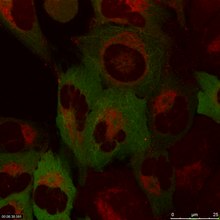
Shikonin is also found in the Chinese herbal medicine plant Lithospermum erythrorhizon, the red-root gromwell, (紫草 zicao, Pinyin: zǐcǎo). The dried root is a Chinese herbal medicine with various antiviral and biological activities, including inhibition of human immunodeficiency virus type 1 (HIV-1).[9][10][11]

No comments:
Post a Comment